[lead_text]
The issues
[/lead_text]
Bath is a historic city with a variety of road and footway surfaces that have a traditional character that is not always conducive to a smooth walking or wheeling environment.
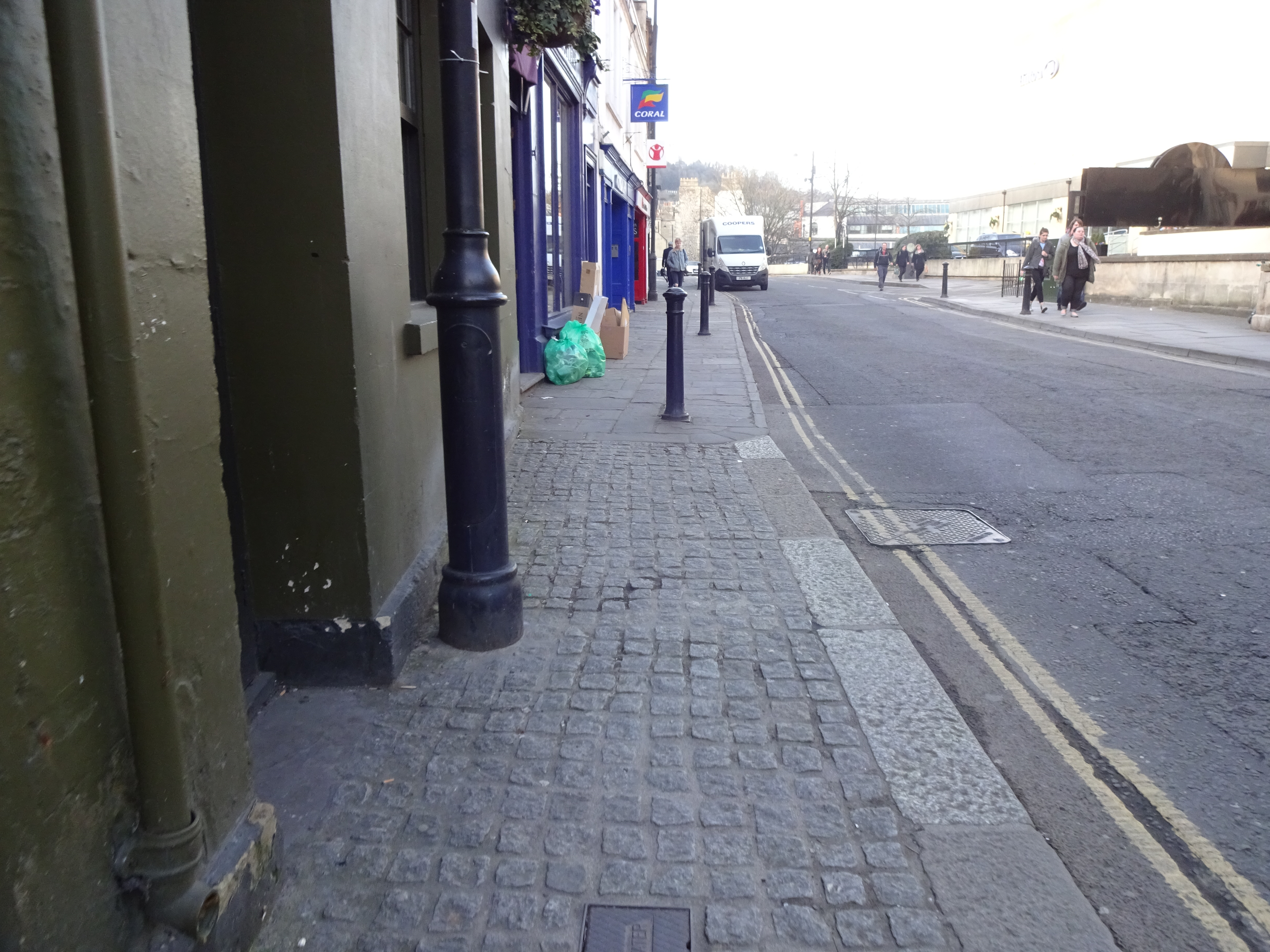
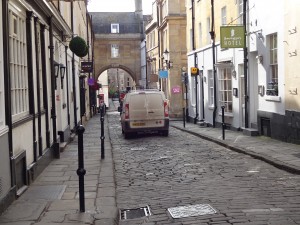
- Some streets and public squares are surfaced with cobbles which are particularly difficult for visually and mobility impaired people including wheelchair users and those using sticks or canes. Even if footways have a smooth paved surface, crowding on the footway forces weaker and slower people onto the cobbled streets.
Many of the pedestrian areas in Bath have old, too smooth and slippery, uneven and cobbled surfaces that cause trip hazards and become treacherous in the wet/cold.
- Areas in the historic centre around Bath Abbey are paved with large, stone flags which are cracking and uneven and difficult to negotiate by people with visual or mobility impairments, besides being a trip hazard for many.
Cobbles make life very difficult for me in powered chair. Difficult for carer pushing manual chair.
Hate cobbled areas and older paving stones
Cobbled streets are virtually impossible to navigate in my wheelchair. Dropped kerbs need to be level (flush) to road as electric wheelchairs are difficult to get up at the lip.
- Some footways are also cobbled or part cobbled with vehicular crossover sections given a cobbled surface.
- Even newer large pedestrianised areas such as the north end of Stall Street, have sections of cobbled surfaces located at random sections. These sections cannot be avoided by wheelchair users or visually or mobility impaired people in the large crowds that restrict choice of route and they find it uncomfortable to cross over these sections.
[lead_text]
Examples
[/lead_text]
- The area in front of Bath Abbey is paved with large stones, which are now cracking and uneven

- North part of Stall Street cobbled area outside Roman Baths


- Narrow cobbled footways on Walcot Road
[lead_text]
Recommendations
[/lead_text]
- Maintenance of stone flags should be a priority. When replaced consideration should be given to using smaller flag stones that are easier to lay and maintain.
- Footway cobbles should be replaced with a smooth, paved, even surface with cross-fall minimised to 1:50 maximum.
- In large areas with cobbled surfaces where these are considered to be essential to the historic character of the environment, consideration should be given to providing a firm, smooth, even path through the cobbles, which could be along the edges (as a footway) and should be wide enough to accommodate wheelchair users and passing walkers.
- Where it is considered important for cobbles to be part of a pedestrianised environment these should not be distributed randomly, but in a consistent layout that allows wheelchair users and others proceeding in a straight line to avoid the cobbled sections.